
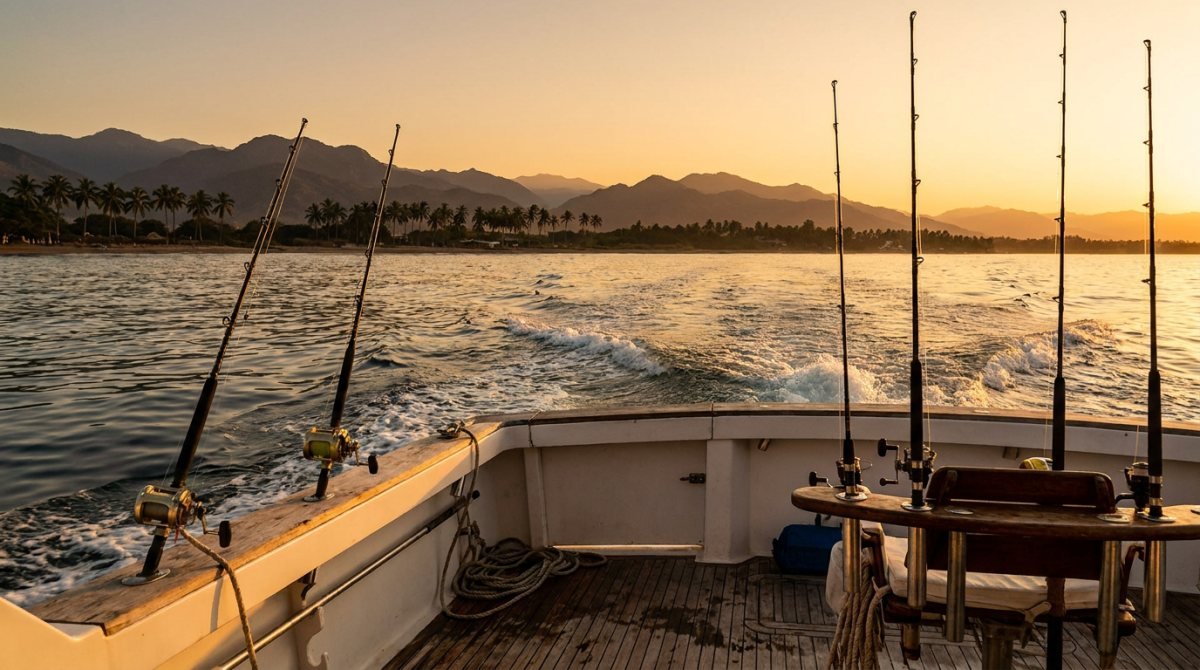
Almost every visitor to Puerto Vallarta books one boat day. They pick a sunset cruise or a snorkeling trip, enjoy it, and spend the rest of the week on land wondering why the bay looked better from the water. After years of running charters out of Banderas Bay, our honest advice is the opposite: build the week around the water and let everything else fill the gaps. Here is how that actually looks, day by day.
Why the bay deserves to be the backbone
Banderas Bay is one of the largest bays in the Americas and unusually deep — the seabed drops away sharply not far from shore. That single geological fact is why you can be on productive fishing grounds within a short run of the breakwater, why whales come this close to the city in winter, and why the snorkeling at Los Arcos works despite being minutes from a highway.
It also means the water changes character through the day. Mornings are glass. Wind builds through the afternoon almost every day of the year, and by three o'clock the bay has chop. Every good plan on this coast starts early — and that is the real reason to organize the week around the boat days rather than squeezing them in.
Day 1 — Arrive and stay close
Resist the urge to book something for the first afternoon. Flights land at odd hours, the humidity takes a day, and the bay is not going anywhere. Walk the Malecón, eat somewhere with a view of the water you are about to spend the week on, and get to bed early.
The one thing worth doing on arrival day is confirming the departures you have already booked: exact marina, exact dock, exact time. "Puerto Vallarta" covers a lot of coastline at six in the morning.
Day 2 — The half-day introduction
Start with a shorter trip. A four-hour morning run inside the bay does three things: it tells you how your group handles a boat, it puts you on fish or on snorkel spots without a long crossing, and it leaves the whole afternoon intact.
Inshore is where most first-timers should begin. You are working structure close to the coast — snapper, jack crevalle, rooster fish — with land in sight the whole time. Kids do well on these trips. So do adults who are not sure yet whether they love open water.
Back at the dock by one, you have an afternoon free. That is when a broad things to do in Puerto Vallarta roundup earns its keep — you can decide over lunch instead of committing in advance.
Day 3 — Get off the water on purpose
This is the day people skip, and it is the one that makes the week work. Two boat days back to back is a lot of sun, salt and motion for most groups. Go inland instead.
Forty minutes from the Zona Romántica the landscape turns to river valleys and jungle. Canopy lines, waterfall hikes, horseback trails and ATV routes all live in that band of foothills, and the temperature drops a few welcome degrees. Operators running ATV, zipline and horseback tours in Puerto Vallarta handle pickup, which matters because the trailheads are not places you want to find on your own in a rental car.
You will also come back appreciating the boat. Nothing sells a flat morning on the bay like a day of dust and mud.
Day 4 — The full day offshore
This is the trip the week is built for. A full day gets you out to the offshore structure — the seamounts where the water goes deep blue and the big pelagics live. Marlin, sailfish, yellowfin tuna and dorado are all in play depending on the month, and even on a slow day the run itself is worth it.
A few honest notes about full days:
- Departures are early. Five or six in the morning is normal. Plan the night before accordingly.
- It is a commitment. Eight to ten hours, and you cannot get off halfway. Anyone unsure about seasickness should do the half day first — that is what Day 2 was for.
- Weather governs. If the port closes, it closes. A good operator reschedules rather than pushing out in bad conditions, and you should want that.
- Release is normal. Billfish are reserved for sport fishing here and reputable boats release them. What you keep is for dinner, not for volume.
If you are weighing which boat and which duration fits your group, our own overview of the best boat tours in Puerto Vallarta breaks the options down by trip length rather than by price.
Day 5 — Slow water and the south shore
After a full day offshore, most groups want the ocean without the effort. The south shore delivers exactly that. Las Ánimas, Quimixto and Yelapa have no road access — you reach them by water taxi from Boca de Tomatlán — so a beach day turns into a small expedition without ever feeling strenuous.
This is also the best day for anyone who wants to try surfing. The gentler sand-bottom breaks north of the bay are forgiving, sessions run about two hours, and schools offering surf lessons in Puerto Vallarta supply everything including the ride. It is the least demanding way to spend a morning in the water and it splits a group nicely — half surf, half beach.
Day 6 — The one that depends on the season
What belongs here changes through the year, and pretending otherwise is how people end up disappointed.
- December to March. Whale watching, no contest. Humpbacks come into the bay to calve and the encounters are close, regulated and genuinely moving. Also the calmest water of the year.
- April and May. Quietly the best months here. Warm water, thin crowds, dry trails, easing prices. A Marietas Islands day is the pick — access is capped by permit, so book it early.
- June to October. Green season. Mornings are usually clear and the afternoons get dramatic. Water is at its warmest, the offshore fishing is at its best, and the jungle looks like a different country.
- November. The reset month. Everything is green from the rains, humidity breaks, and high season has not landed yet.
For a wider read on what is worth doing in a given month across the whole region, a general Puerto Vallarta travel guide is a good sanity check before you commit a day.
Day 7 — Celebrate it properly
End the week the way it should end: a private charter with your own group, a cooler you packed yourself, and no schedule. Three hours at sunset is enough. This is also when most anniversaries, birthdays and small celebrations happen on our boats, and it is the trip people describe when they get home.
If there is something to mark, our guide to planning a yacht celebration in Puerto Vallarta covers the logistics — catering, decorations, timing — so the day stays about the people on board.
What to book ahead and what to leave open
Book in advance: whale watching in season, Marietas access, full-day charters, and anything falling on a holiday week. These genuinely sell out, and the good captains sell out first.
Leave open: beach days, water taxis to the south shore, food, and at least one full day with nothing on it. Weather on this coast is local and moves fast. A flexible day is worth more than a perfectly packed schedule, and it is the difference between rescheduling a rained-out trip and losing it.
Practical things nobody tells you
- Sun on the water is roughly double. Reef-safe sunscreen, a long-sleeve rash guard and a hat with a strap. The strap matters.
- Take the motion sickness tablet before you board, not when you start feeling it. By then it is too late.
- Cash for the village beaches. Yelapa and Quimixto are not card country.
- Ask what is included. Licences, gear, bait, ice, drinks and cleaning your catch vary by operator, and the answer tells you a lot about how the operation is run.
- Confirm the weather policy in writing. Before you pay, not after the port closes.
If you are traveling with Spanish-speaking family or want the local-language version of all this, the same ground is covered in the guía de Puerto Vallarta — useful for the half of the group that would rather read it in Spanish.
Frequently asked questions
Is a week too long for Puerto Vallarta?
No — a week is roughly the point at which the region opens up. Three or four days keeps you in the city and on one or two boat trips. Seven gives you the offshore day, the south shore, the jungle and a day to do nothing, which is when most people decide they will come back.
How many boat days is too many?
Three in a week is comfortable for most groups; four if everyone is experienced on the water. The limiting factor is sun and motion, not enthusiasm. Alternating water days with land days is why the plan above works.
What if the weather cancels a trip?
It happens, mostly in the green season and mostly for a morning rather than a week. This is exactly why you keep one flexible day. A reputable operator will reschedule you rather than sail in conditions that would ruin the trip.
Do I need to know how to fish?
Not at all. The crew rigs everything, sets the drag, and talks you through the fight. Most first marlin on our boats are caught by people who had never held a rod that size.
Can this plan work with kids?
Yes, with two adjustments: keep the half day, and swap the full offshore day for a snorkeling trip or a south-shore beach hop. Kids do well on short, close-to-shore trips and poorly on eight-hour crossings.
Ready to build your week?
Tell us your dates, your group size and how many days you want on the water, and we will lay out the boats that fit. The good ones book first in high season — send us a request and we will hold your dates.